Geothermal brines
Hot subsurface waters may contain dissolved lithium. Extraction potential depends on brine chemistry and compatibility with the energy process.
A Ukrainian project for direct lithium extraction from subsurface brines.
Geology, oil & gas infrastructure and DLE technology — a new perspective on Ukraine’s critical minerals.
Why lithium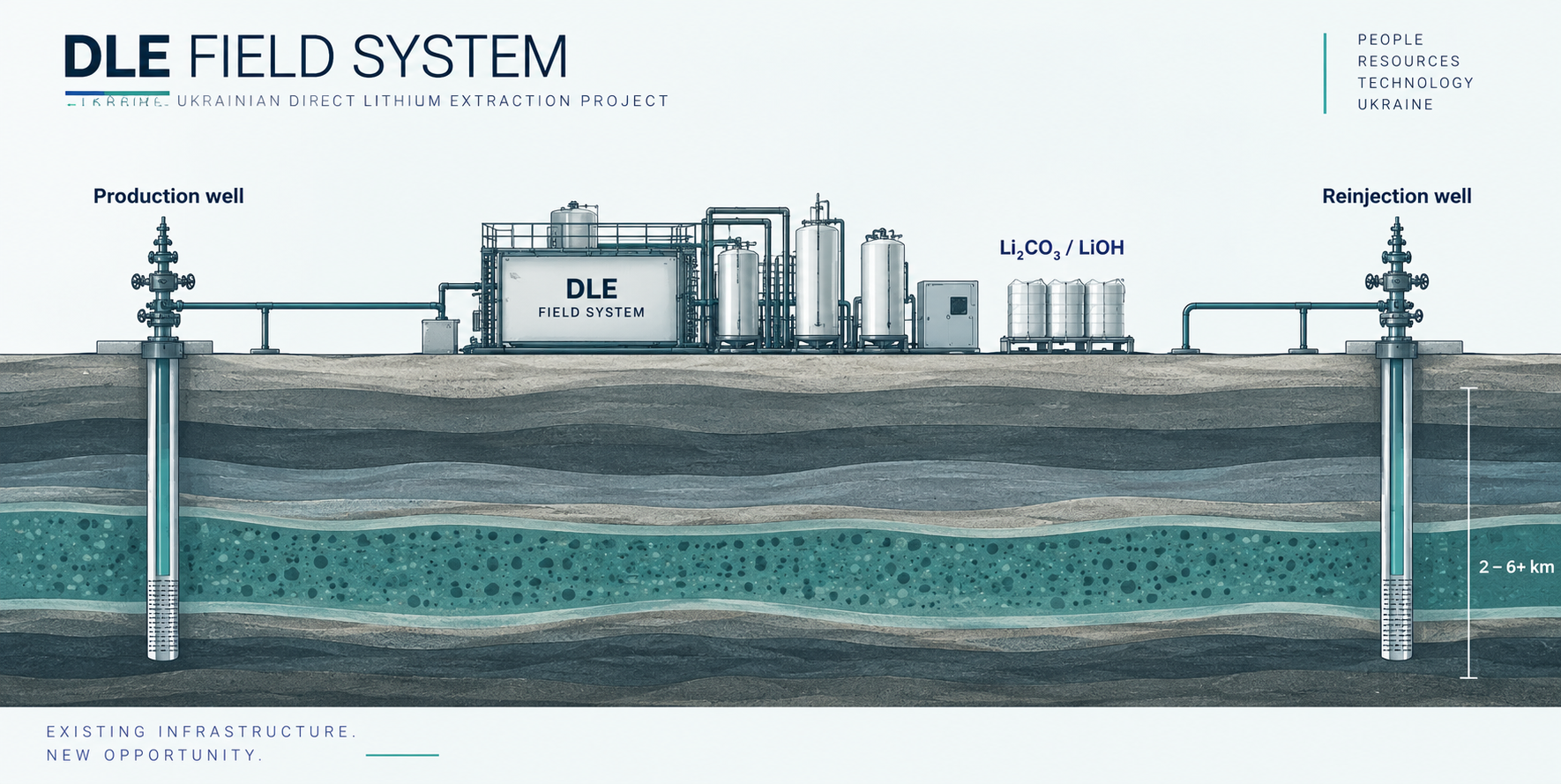
Lithium is a critical mineral resource for lithium-ion batteries, from electric vehicles to energy storage systems.
Its importance reflects two factors: its role in energy technologies and the reliability of supply. New sources and extraction technologies expand the opportunities across this value chain.
Lithium combines high importance to energy with elevated supply risk, making the development of new resource sources strategically important.
Hot subsurface waters may contain dissolved lithium. Extraction potential depends on brine chemistry and compatibility with the energy process.
Lithium-bearing formation waters are a focus of geological and technology studies. Existing well infrastructure may provide a basis for resource access.
Sources: IEA — Critical Minerals ↗ · USGS — Lithium ↗
We combine geology, engineering and DLE technology to progressively verify the resource and its development potential.
Ukraine’s potentialFrom brine characterisation to testing and scale-up: how technology pathways are assessed.
Explore DLE technologies ↗Developments and research across the global DLE industry, linked to original sources. Company announcements are distinguished from independent confirmation, and research from commercial milestones.
Updated: 24/09/2026. Sources are scheduled for daily review. New entries require verified source material.
EMP Metals says commissioning of Aurora in Saskatchewan is complete. The facility is designed for 10 m³ of brine per day; EMP and Saltworks are optimizing the process and collecting data for future scale-up. This is a demonstration facility, not a commercial plant start-up.
Source: EMP Metals via CNWVulcan says commercial manufacturing of its sorbent for lithium extraction from geothermal brines has begun in Germany. Initial batches are intended for Lionheart. This milestone concerns sorbent supply; the company targets commissioning of the lithium project in the second half of 2028.
Source: Vulcan EnergyLithiumBank says Stantec has completed its desktop environmental review and begun baseline field surveys for the EPEA application. Submission is targeted for mid-2027 alongside SLB feasibility and engineering work. This is permitting preparation, not construction approval or a production start.
Source: LithiumBankE3 announced an MOU with Epsilon CAM, effective September 1, contemplating up to 5,000 tonnes of battery-grade lithium carbonate annually for five years. It is non-binding; final volumes and terms require a definitive agreement. The commercial Clearwater project remains under development.
Source: E3 LithiumLibertyStream reports a non-binding term sheet with Endurance for Freedom 1, Freedom 2 and future oilfield-brine lithium sites. The proposed framework totals up to US$95 million. Funding depends on due diligence, approvals and definitive agreements; the announcement does not establish that funds have been received.
Source: LibertyStreamVulcan announced the Ludwig pre-feasibility study near Ludwigshafen. The concept combines VULSORB lithium extraction from geothermal brines with heat production. Its target of 21,100 tonnes of lithium carbonate annually is a planned capacity. Further studies and a final investment decision remain ahead.
Source: Vulcan EnergyStandard Lithium reports a binding take-or-pay agreement for 8,000 tonnes of battery-grade lithium carbonate annually for ten years after South West Arkansas starts commercial production. The Equinor partnership targets an investment decision in 2026 and first production in 2029. Deliveries under this agreement have not started.
Source: Standard Lithium — SEC filingLibertyStream says all full certificates issued from May 14 through August 14 showed lithium carbonate purity of at least 99.7%. Its integrated DLE and refining platform produced about three tonnes across different specifications and completed several 24-hour campaigns. These are Freedom Launchpad results, not the start of the planned Freedom 1 plant.
Source: LibertyStreamLilac says its subsidiary was selected for DOE support for phase one of its Great Salt Lake lithium project. The award remains subject to final negotiations. The project plans to use direct lithium extraction from brine; selection does not mean production has started.
Source: Lilac SolutionsThe company described well completion and surface-equipment preparation for reservoir testing at Clearwater.
Source: E3 LithiumThe company reported filing its definitive feasibility study. Phase-one design capacity is 22,500 tonnes of lithium carbonate per year, a plan rather than actual production.
Source: Standard Lithium / EquinorThe announcement concerns a demonstration facility, not commissioning of a commercial plant.
Source: E3 LithiumTechnology, resources, research and investment.